If you’re installing new soffit or replacing damaged sections, the material you choose affects everything from your maintenance schedule to how long it lasts in South Louisiana’s heat and humidity. Vinyl, wood, and James Hardie fiber cement are the three most common options — and each comes with real trade-offs worth understanding before you decide.
This guide breaks down how each material performs, what it costs, how it holds up in a Gulf Coast climate, and which one makes sense for different situations.
What to Consider Before You Choose
Before comparing materials head-to-head, it helps to know which factors actually matter for your situation:
Climate exposure — South Louisiana’s combination of heat, humidity, heavy rain, and hurricane-season wind is harder on exterior materials than most of the country.
Maintenance tolerance — Some materials need repainting and regular upkeep; others are close to maintenance-free for decades.
Budget — upfront vs. long-term — The cheapest material to install isn’t always the cheapest over 20–30 years.
Appearance and resale value — Soffit runs the entire perimeter of your roofline, so it’s more visible than most homeowners realize — and buyers notice mismatched or deteriorating trim.
Existing home style — Historic or premium homes often call for a different material choice than a straightforward vinyl-sided ranch.
Vinyl Soffit
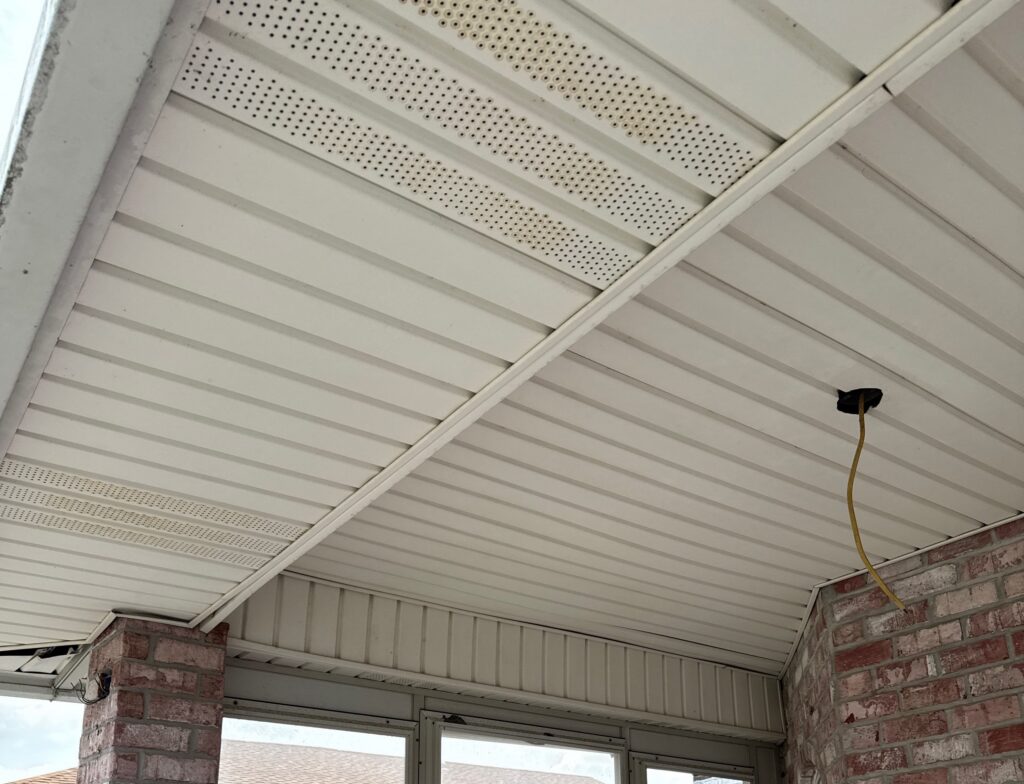
Vinyl is the most common soffit material on the market, largely because it’s the most budget-friendly option that still performs reasonably well.
Pros
- Lowest upfront material and installation cost of the three
- Naturally resistant to moisture — won’t rot
- Never needs painting
- Wide availability of colors and vented/non-vented panel styles
- Lightweight and relatively straightforward to install
Cons
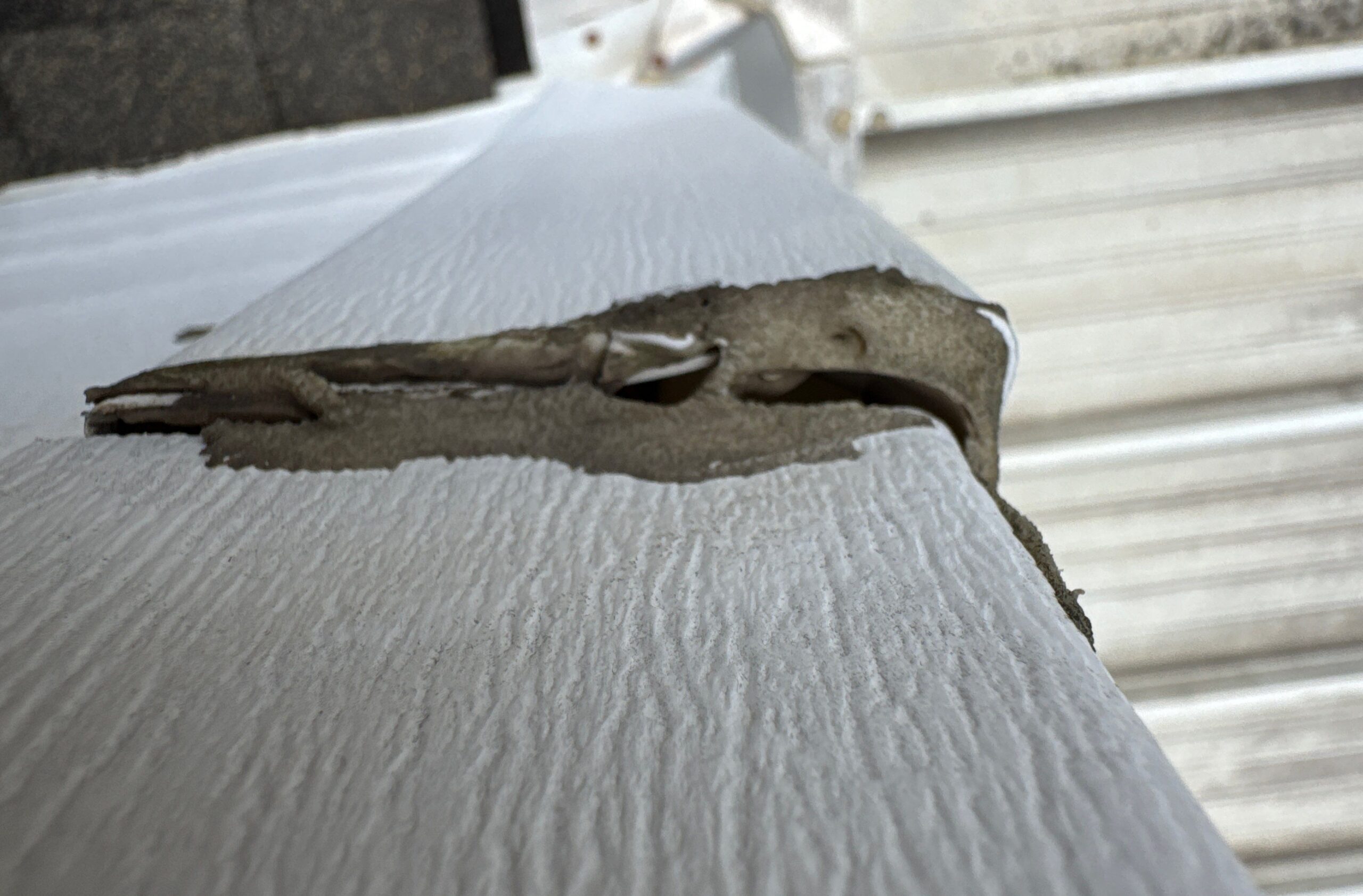
- Can become brittle with prolonged UV and heat exposure over many years
- Lower-quality vinyl can warp or sag in extreme heat — a real consideration during South Louisiana summers
- Can crack on impact (falling branches, ladder contact)
- Shorter realistic lifespan than fiber cement in high-heat climates
- Limited structural rigidity compared to other materials
Best for: budget-conscious projects, rental or investment properties, and homeowners prioritizing low maintenance over maximum longevity.
Wood Soffit
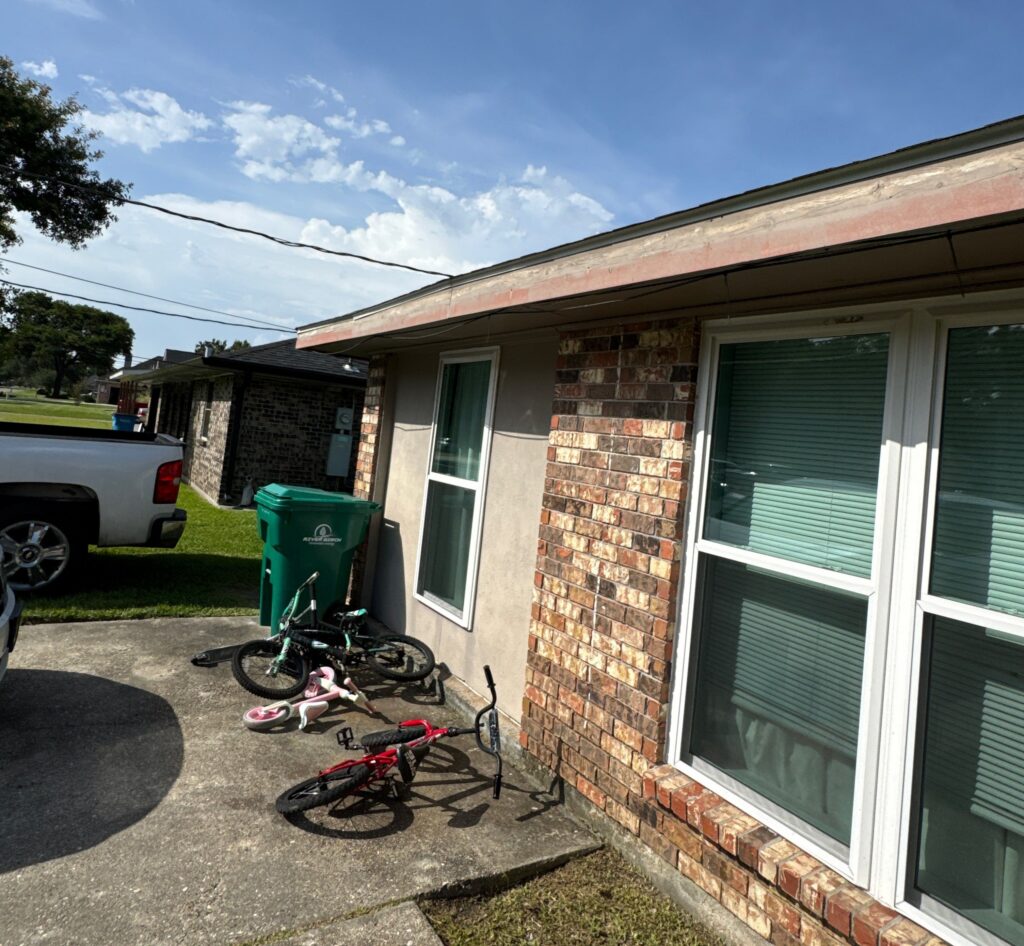
Wood is the traditional soffit material, and it’s still common on older South Louisiana homes. It offers a classic look that’s hard to replicate exactly with synthetic materials, but it requires the most upkeep of the three by a wide margin.
Pros
- Classic, authentic appearance — especially valuable on historic or premium homes
- Can be painted any color and repainted to match changing exteriors
- Familiar material for most contractors to install and repair
- Individual boards can sometimes be spot-repaired rather than replaced wholesale
Cons
- Most vulnerable of the three materials to South Louisiana’s climate
- Prone to rot without consistent maintenance and repainting
- Attracts pests — wasps, carpenter ants, and rodents can exploit softened wood
- Requires repainting every few years to maintain protection
- Highest long-term maintenance cost of the three, even though material cost can be moderate
Best for: historic homes where matching original materials matters, homeowners committed to a regular maintenance schedule, and situations where an exact color match or profile isn’t available in other materials.
James Hardie (Fiber Cement) Soffit
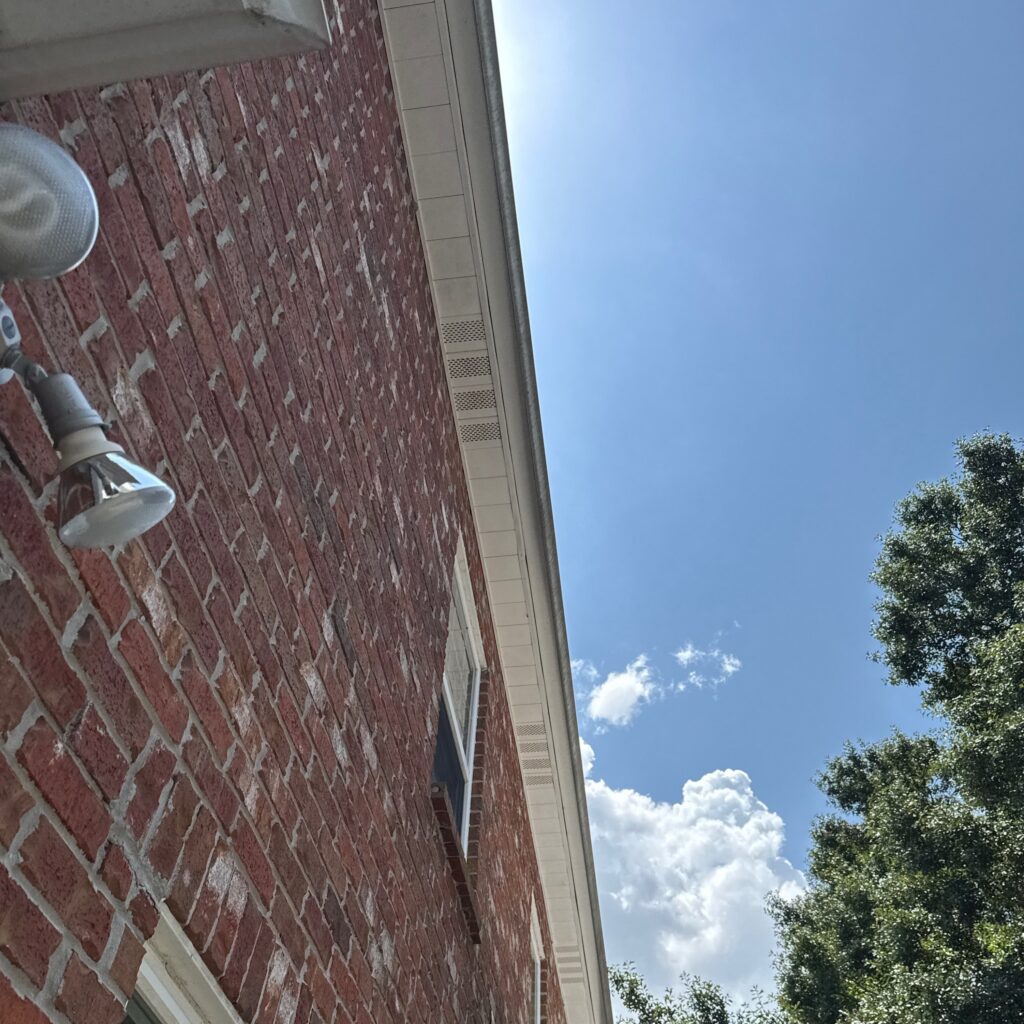
James Hardie is an engineered fiber-cement product — a mix of cement, sand, and cellulose fibers — built specifically to outperform both vinyl and wood in demanding climates. It’s a newer option relative to wood and vinyl, but it’s become a strong choice for homeowners who want wood’s appearance without wood’s maintenance.
Pros
- Significantly more resistant to moisture, rot, and pests than wood
- Won’t warp, crack, or sag from heat the way vinyl can
- Fire-resistant — a meaningful advantage over both wood and vinyl
- Holds paint far longer than wood, reducing repainting frequency
- Longer realistic lifespan than vinyl in high-heat, high-humidity climates
Cons
- Higher upfront material and installation cost than vinyl
- Heavier than vinyl, which can mean more involved installation
- Still requires periodic repainting, though far less often than wood
- Fewer specialty contractors are experienced installing it correctly compared to vinyl or wood
Best for: homeowners planning to stay long-term who want the durability to match South Louisiana’s climate, anyone who wants wood’s look without wood’s maintenance schedule, and situations where fire resistance is a priority.
What About Aluminum?
Aluminum isn’t part of this comparison’s title, but it’s worth a mention for full context. Aluminum soffit and fascia are naturally resistant to rot, insects, and moisture, and hold up well in humid climates without warping. It won’t dent as easily damage as vinyl in some conditions, but it can dent from direct impact and shows wear at seams and fasteners over time. Cost and durability generally land between vinyl and James Hardie, making it a reasonable middle option worth asking about if neither of the other three feels like the right fit.
Side-by-Side Comparison
| Vinyl | Wood | James Hardie | Aluminum | |
| Upfront Cost | $ | $$ | $$$ | $$ |
| Maintenance | Minimal | High | Low | Minimal |
| Moisture Resistance | Good | Poor | Excellent | Excellent |
| Heat/UV Durability | Fair | Fair | Excellent | Good |
| Pest Resistance | Good | Poor | Excellent | Excellent |
| Fire Resistance | Poor | Poor | Excellent | Good |
| Realistic Lifespan | 20–30 yrs | 10–15 yrs* | 30+ yrs | 20–40 yrs |
| Repaintable | No | Yes (required) | Yes (rarely needed) | Limited |
*Without consistent maintenance and repainting in a humid climate. Well-maintained wood can last significantly longer.
Our Recommendation for South Louisiana Homes
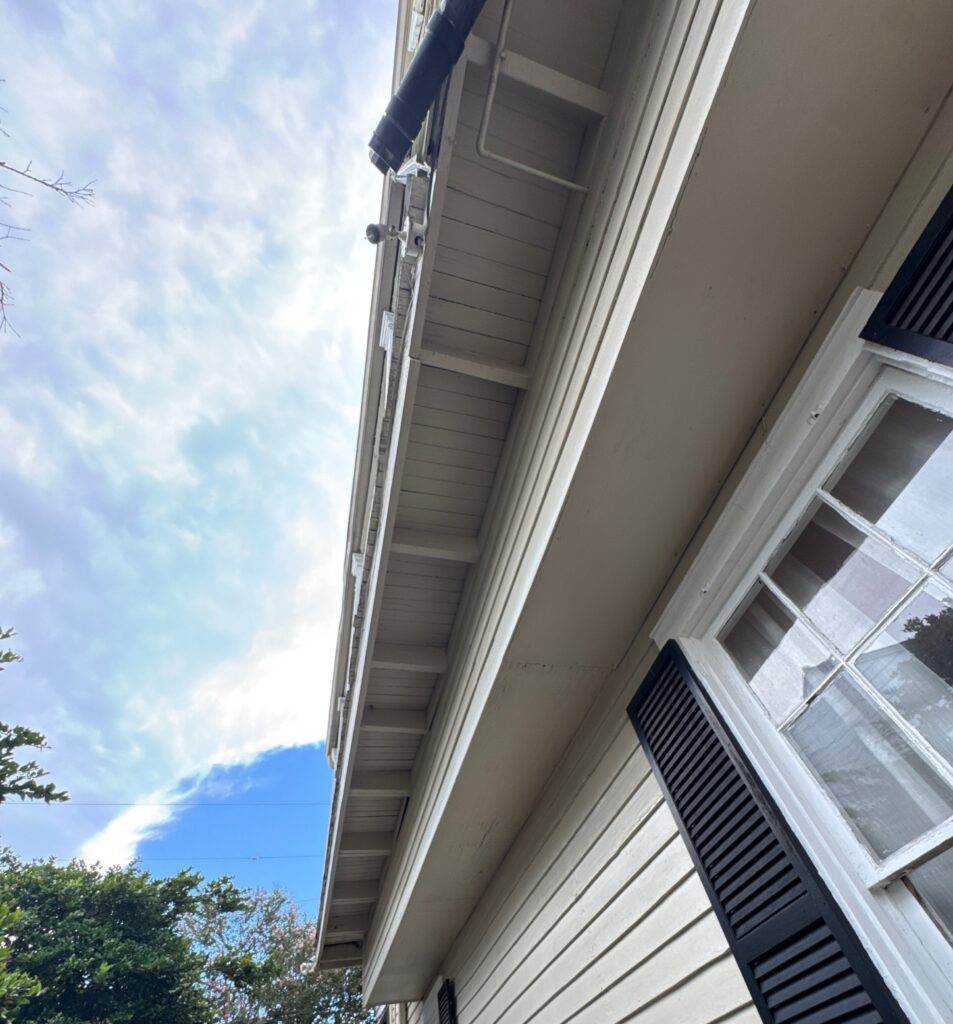
For most homeowners in Metairie, New Orleans, and South Louisiana, James Hardie fiber cement offers the strongest long-term value — its resistance to heat, humidity, and moisture directly addresses the conditions that cause the most soffit and fascia failures in this region. Vinyl remains a smart choice for budget-conscious projects or rental properties where lowest upfront cost matters more than 30-year performance. Wood makes sense primarily for historic homes where matching original materials is a priority, provided the homeowner is committed to the maintenance it requires.
Frequently Asked Questions
Can I mix materials on the same house?
Yes, though it’s most common to keep fascia and soffit material consistent across the full roofline for a uniform appearance. Some homeowners do use a different material on a detached structure like a shed or garage versus the main house.
Is James Hardie soffit worth the extra cost?
For homeowners planning to stay in their home long-term, the extended lifespan and reduced maintenance typically offset the higher upfront cost over a 15–20 year horizon — particularly in a climate as demanding as South Louisiana’s.
How long does vinyl soffit actually last here?
Quality vinyl soffit typically lasts 20–30 years in most climates, though prolonged direct heat and UV exposure in South Louisiana summers can shorten that range for lower-grade products.
Does soffit material affect attic ventilation?
Not directly — vented panels are available in vinyl, aluminum, and some fiber cement products. What matters more is that the ventilation is properly sized and unobstructed, regardless of material.
Can damaged wood soffit be replaced with a different material?
Yes, and it’s a common upgrade path. Many homeowners replace failing wood soffit with vinyl or James Hardie during a repair, rather than replacing wood with wood, specifically to reduce future maintenance.
Get Expert Guidance on the Right Material for Your Home
Every home is different, and the right soffit material depends on your budget, your home’s style, and how long you’re planning to stay. Our team can walk you through the options in person and recommend what actually makes sense for your roofline — not just what’s easiest to install.
We install and repair soffit and fascia in all three materials throughout Metairie, New Orleans, and South Louisiana — see our Soffit and Fascia services page for more, or give us a call to schedule a consultation. New to the topic? Start with our
What Is Soffit and Fascia? guide, or check out the warning signs in
Signs Your Fascia Is Rotting if you’re troubleshooting existing damage.
Call us at (504) 230-6512 or request a free consultation online.