Fascia rot rarely announces itself. It starts small — a soft spot, a hairline gap, a streak of staining — and by the time it’s obvious from the ground, it’s usually already affecting your gutters, your roofline, and possibly the structure underneath. In South Louisiana’s humidity and heavy rain seasons, fascia takes more punishment than almost anywhere else in the country, which makes early detection the difference between a simple repair and a full gutter-and-fascia replacement.
This guide walks through exactly what fascia rot looks like at every stage, what causes it, why it’s so closely tied to gutter failure, and what to do about it before the damage spreads.
What Is Fascia Rot?
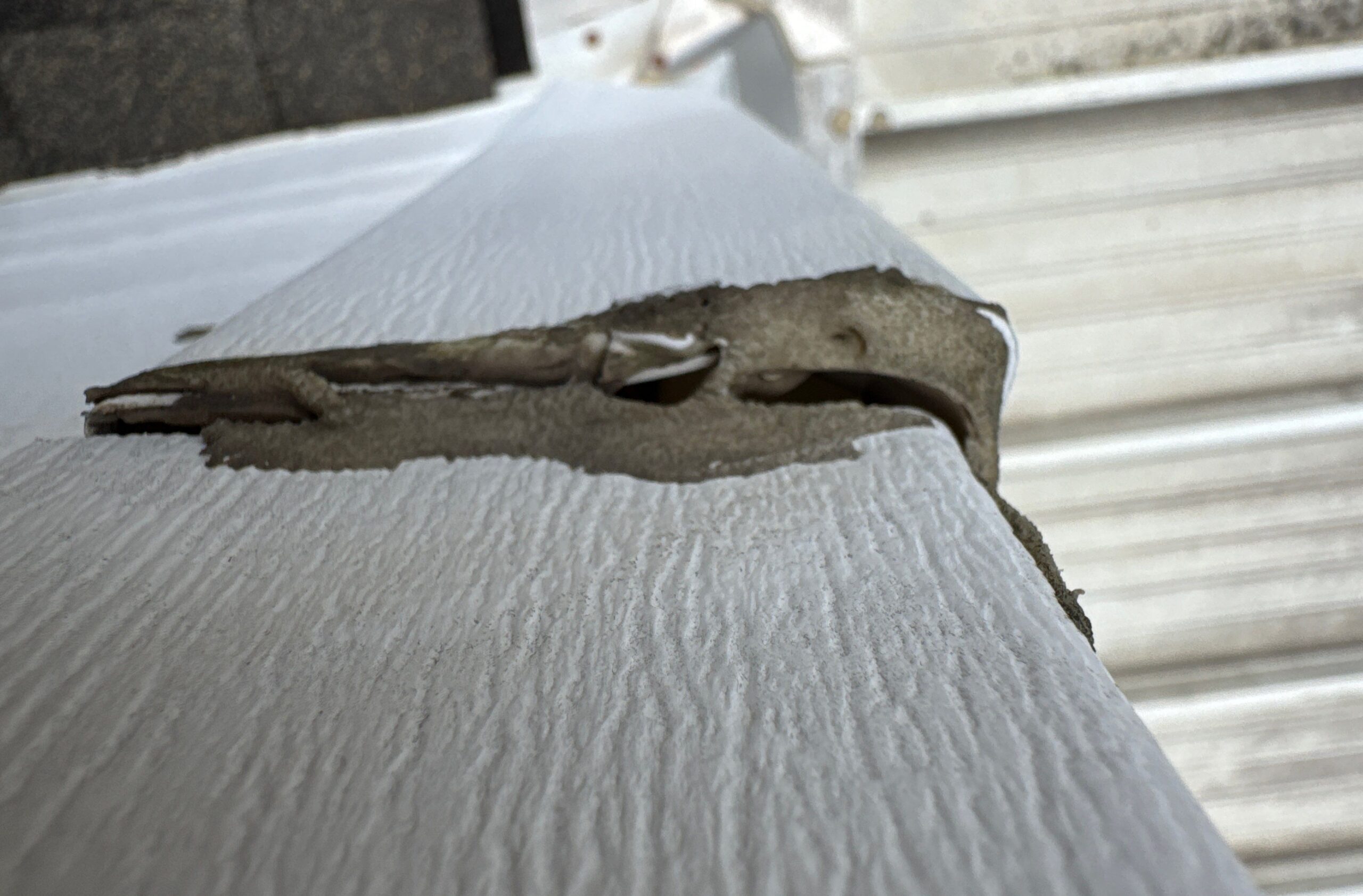
Fascia rot is the deterioration of the fascia board — the trim piece that runs along your roofline and holds your gutters in place — usually caused by prolonged moisture exposure. Most fascia rot is wood rot, since wood remains the most common fascia material on older South Louisiana homes, though other materials can fail in their own ways under the same conditions.
Rot typically starts from the inside or the back of the board, where moisture collects and can’t dry out, which is exactly why it’s often more advanced than it looks by the time it becomes visible from the ground or a ladder.
What Causes Fascia to Rot?
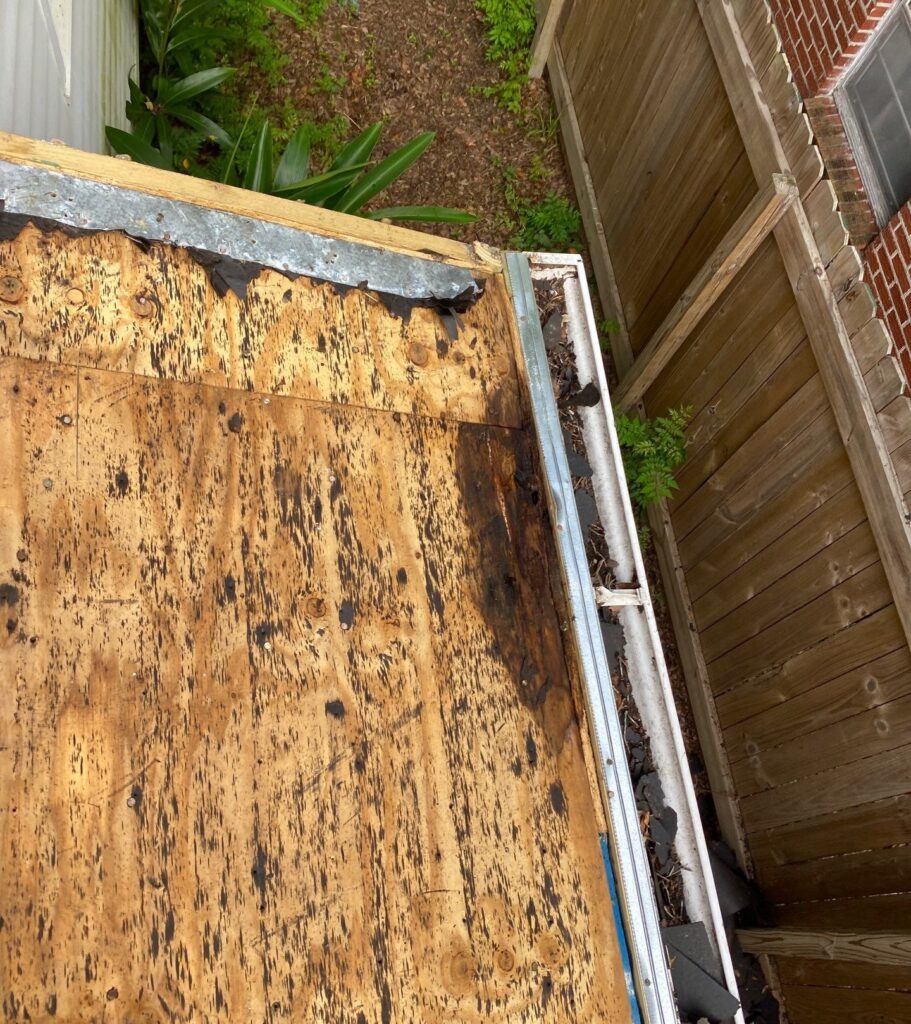
Clogged or overflowing gutters — When gutters can’t drain properly, water backs up and sits against the fascia board for extended periods — the single most common cause of fascia rot.
Roof leaks draining along the roofline — Water that should be shedding into the gutter system sometimes finds its way behind the fascia instead, saturating the board from angles you can’t see.
Failed or missing paint/sealant — Once a wood fascia board’s protective coating fails, it absorbs moisture directly, and humidity does the rest.
Poor attic ventilation — Trapped heat and moisture in the attic can work outward through the soffit and affect the fascia it’s connected to.
Age and prolonged humidity exposure — Even well-maintained wood fascia has a lifespan in a climate as consistently humid as South Louisiana’s.
7 Signs Your Fascia Is Rotting
Fascia rot moves through recognizable stages. Catching it early — at the paint and staining stage — is far less expensive than waiting until a board is soft enough to push a finger through.
1. Peeling, Bubbling, or Cracking Paint
This is usually the earliest visible sign. Paint failure on fascia almost always means moisture is trapped underneath, working against the wood from the inside out.
2. Dark Staining or Streaking
Vertical streaks running down the fascia board are a strong indicator that water is overflowing from your gutters, or that a roof leak is draining along the roofline instead of into the gutter system as designed.
3. Visible Sagging or Separation
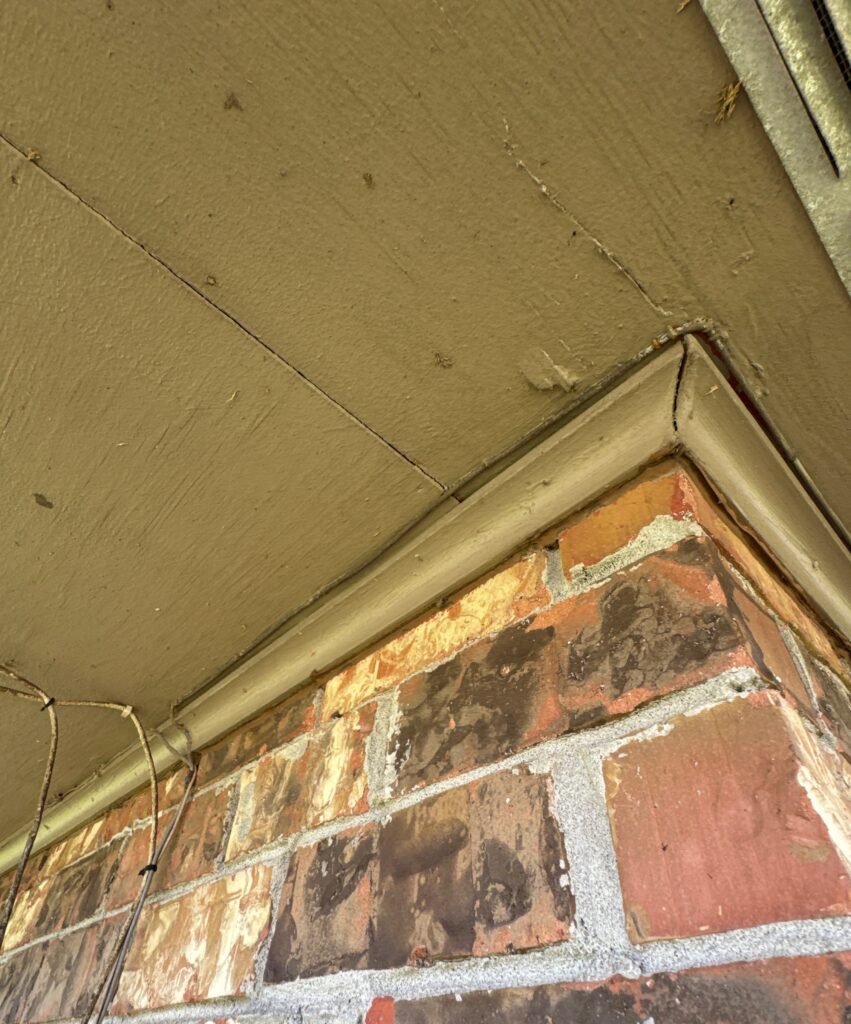
If the fascia board appears to be pulling away from the roofline, or you can see a gap opening up at a seam or corner, rot has usually progressed enough to compromise the wood’s structural integrity — or the fasteners holding it in place.
4. Soft or Spongy Wood
Press gently on the board. If it gives, flexes, or feels spongy rather than solid, rot has already set in beneath the surface — even if the paint still looks intact from a distance.
5. Splitting, Cracking, or Nail Pops
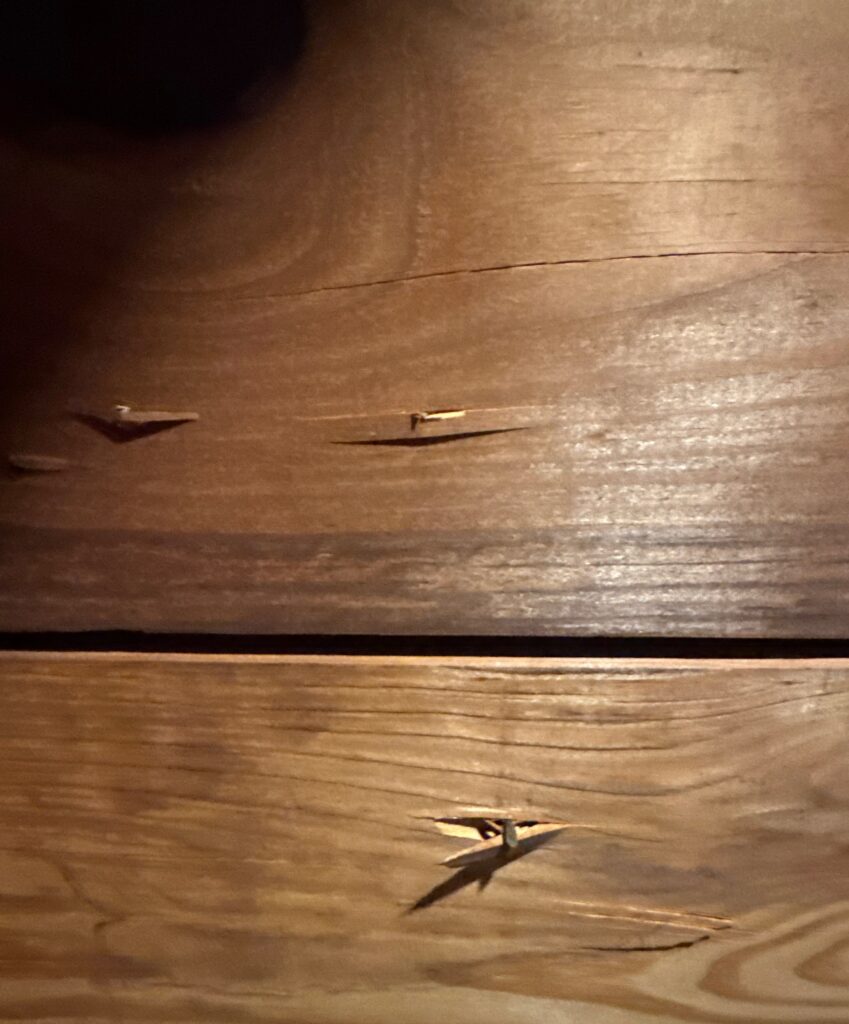
As wood fascia weathers and expands and contracts with humidity swings, it can split along the grain or push fasteners partway out — both signs the board’s structural integrity is declining.
6. Gutters Pulling Away From the Roofline
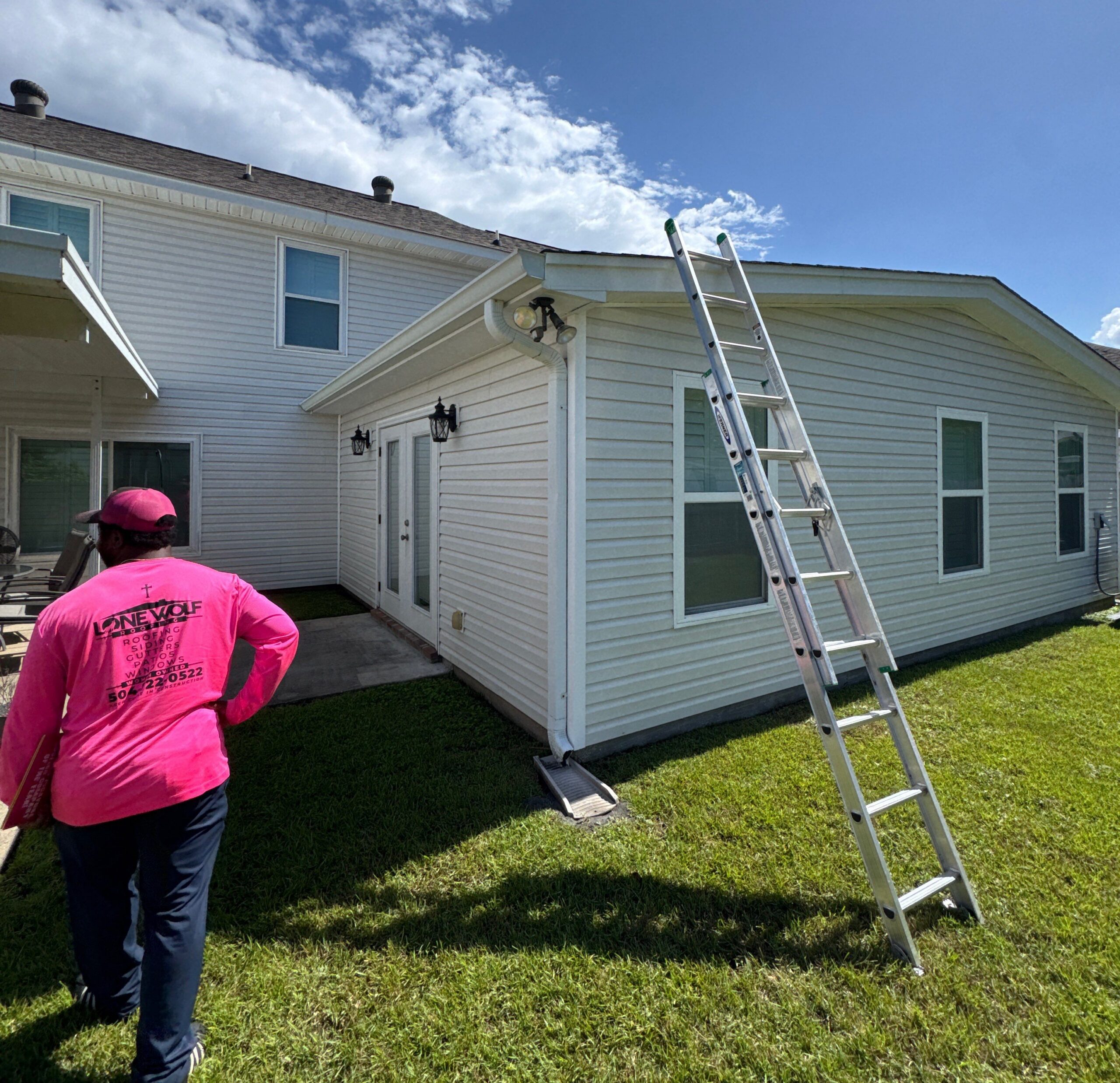
Because gutters are fastened directly to fascia, a sagging or detached gutter section is frequently a fascia problem wearing a gutter disguise. If your gutters look uneven or are visibly separating from the roof edge, check the fascia behind them before assuming the gutter itself is at fault.
7. Visible Pest Activity Near the Roofline
Rotting wood is soft and easy for pests to exploit. Wasps, carpenter ants, and even birds and rodents are drawn to compromised fascia and soffit as easy entry points into the eaves and attic.
Why Fascia Rot Damages Your Gutters
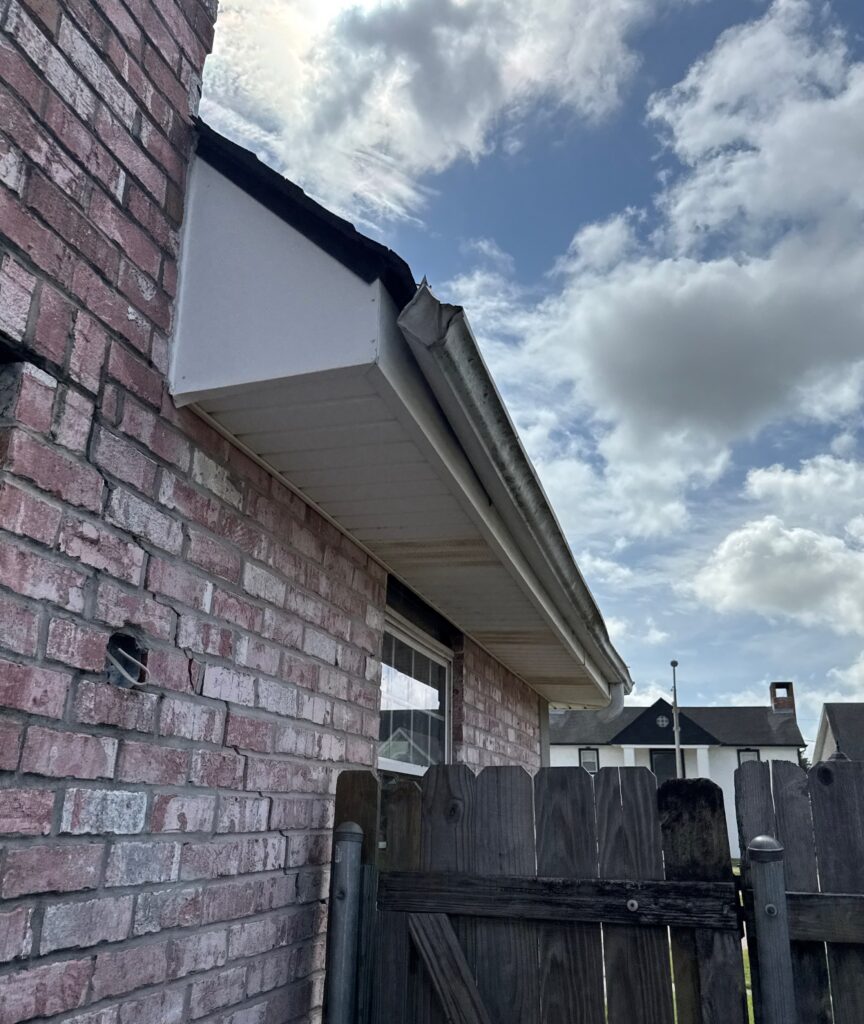
Fascia and gutters are structurally connected — your gutter system is hung directly from the fascia board using hangers, brackets, or spikes driven into the wood. That connection means fascia condition and gutter performance rise and fall together.
- Rotting fascia can’t hold fasteners securely, so gutters begin to sag, pull loose, or detach entirely — sometimes during a single heavy storm
- A detached or misaligned gutter section stops draining properly, which sends even more water directly onto the fascia, accelerating the rot in a feedback loop
- Once gutters pull away, water runs freely down the siding or brick below, which can lead to foundation and landscaping issues beyond the roofline
- Replacing gutters without addressing the fascia underneath means remounting hardware into wood that’s already compromised — a repair that won’t hold
This is why a rotting fascia board is rarely just a cosmetic issue — it’s usually the root cause of gutter problems that seem, on the surface, unrelated. If you’re dealing with sagging or leaking gutters, it’s worth having your gutter system inspected alongside the fascia behind it, rather than treating them as two separate repairs.
What Happens If Fascia Rot Goes Unaddressed
Left alone, fascia rot rarely stays contained to a single board. Left unaddressed long enough, it typically progresses in this order:
- Isolated soft spots spread along the full run of the board
- Gutters begin to sag, misalign, or separate from the roofline
- Water intrusion reaches the roof decking, soffit, and rafter tails
- Pests gain entry through widening gaps
- What started as a $200–$500 spot repair becomes a full fascia and gutter replacement
The good news: because the warning signs above are visible well before structural failure, most fascia rot is caught and repaired at the inexpensive end of that spectrum — if it’s addressed promptly.
How Fascia Rot Is Repaired
The right fix depends on how far the damage has progressed:
Spot repair — For isolated soft spots or small sections, a contractor can cut out and replace just the damaged portion of the board — the most cost-effective option when caught early.
Full board replacement — When rot has spread along a longer run, replacing the entire fascia board (and often the gutter section attached to it) is more reliable than patching multiple spots.
Gutter removal and reinstallation — Any fascia repair behind an existing gutter run typically requires temporarily removing and reinstalling the gutter section, which is why it’s worth having both inspected and repaired together.
Material upgrade — If wood fascia has failed repeatedly, replacing it with a more moisture-resistant material — aluminum or fiber cement — can prevent the same issue from recurring.
Preventing Fascia Rot
- Clean gutters regularly, especially before and after hurricane season, so overflow doesn’t sit against the fascia
- Inspect fascia twice a year for early signs of paint failure or staining
- Repair small issues immediately rather than waiting for a full section to fail
- Keep attic ventilation clear so trapped moisture doesn’t work outward toward the soffit and fascia
- Consider a moisture-resistant material like aluminum or James Hardie fiber cement if you’re replacing fascia in a high-exposure area
Frequently Asked Questions
Can I repair rotting fascia myself?
Small cosmetic touch-ups are sometimes manageable, but any repair involving gutter removal, structural rot, or roofline height work is best left to a professional — an incomplete repair can fail again quickly, or void a roofing warranty tied to proper ventilation.
How much does fascia repair cost?
Cost depends heavily on the extent of the damage and whether gutters need to be removed and reinstalled. Spot repairs are significantly less expensive than full-run replacement, which is why early detection matters. We break down real cost ranges for Metairie homeowners in a dedicated pricing guide.
Will homeowners insurance cover fascia rot?
Typically not, since rot from gradual moisture exposure and lack of maintenance is usually classified as a maintenance issue rather than sudden storm damage. Fascia damage caused directly by a specific storm event may be covered — worth discussing with your adjuster if that applies.
How can I tell if it’s my fascia or my gutters that’s the problem?
If gutters are sagging, detaching, or pulling away from the roofline, check the fascia behind them first. Loose gutter hardware in solid fascia is a simple fix; loose hardware in rotted fascia won’t hold no matter how many times it’s reattached.
Does fascia rot mean my roof deck is also damaged?
Not necessarily, but it’s worth checking. Fascia sits at the edge of the roof structure, so significant rot is sometimes a sign that moisture has also reached the rafter tails or roof decking above it — this is exactly what a professional inspection is designed to catch.
Catch It Before It Spreads
Fascia rot is one of those problems that’s cheap to fix early and expensive to ignore. If you’re noticing peeling paint, staining, sagging gutters, or any of the signs above, it’s worth having your roofline inspected before the next heavy rain.
Our team repairs and replaces soffit and fascia throughout Metairie, New Orleans, and South Louisiana — see our Soffit and Fascia services page for more, or give us a call to schedule an inspection. New to the topic? Start with our
What Is Soffit and Fascia? guide for the full breakdown of materials, function, and maintenance.
Call us at (504) 230-6512 or request a free inspection online.