Compare the types of cedar shake roofing and find the one that fits your home, your budget, and Louisiana weather.
Cedar shake gives a home a warm, natural look that few roofs can match. It is real wood, so it needs more care than most roofs, especially in Louisiana humidity. But "cedar roof" covers shakes, shingles, treated wood, and synthetic look-alikes, and each one performs differently. Lone Wolf Roofing will help you pick the right one, or tell you honestly when a different roof makes more sense. Our crew is GAF Master Elite and FORTIFIED certified, and every roof starts with a free inspection.
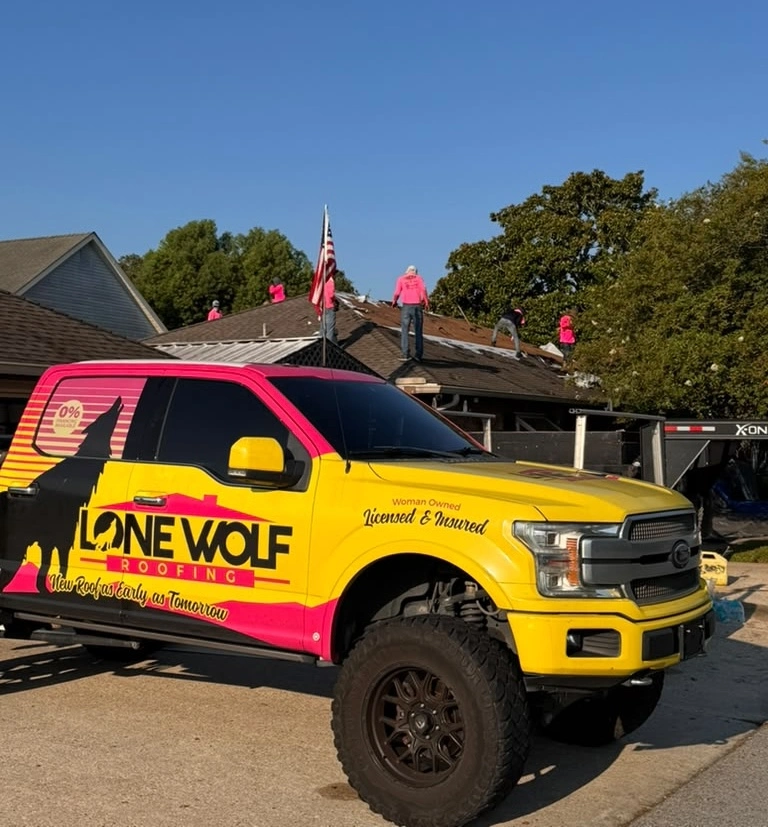
Lone Wolf Roofing is a woman-owned roofing company with its office at 2882 Cleary Avenue in Metairie. Cedar is a natural material, so it reacts to the weather more than other roofs do. We take extra time to look at ventilation, moisture, and local rules before we recommend it. We explain what cedar does well and where it is not the right fit. We also hold the FORTIFIED credential, so we know how roof systems need to be built to handle hurricane winds and wind-driven rain.
You can see our documents on our credentials page.
Most cedar roofs fall into four groups. The right one depends on the look you want, how much upkeep you will accept, and how much you want to spend.
| Type | Look | Strengths | Trade-offs |
|---|---|---|---|
| Hand-split cedar shake | Thick, rugged pieces with a rough, natural face | The most rustic look, thick and durable | Highest cost. Needs the most care in humid weather. |
| Tapersawn cedar shake | Sawn on both faces for a flatter, cleaner look | More even look than hand-split, thick wood | Still needs regular upkeep. Costs more than shingles. |
| Sawn cedar shingle | Thin, smooth, uniform pieces | Neat, tailored look, lower cost than shakes | Thinner wood. More sensitive to moisture and wear. |
| Synthetic cedar shake | Molded to look like cedar | Rot-free, lighter, little upkeep, often easier to insure | Not real wood. Life and wind performance depend on the product. |
Not sure which one is right? We will compare them at your free inspection. If you want to see how cedar stacks up against other materials, read our shingle roofing page, metal roofing page, or slate roofing page, or go back to our roof types guide.
The type is one choice. The grade and treatment are another.
Cedar also needs to breathe. We install it over spaced sheathing or a ventilated underlayment layer, so the wood can dry out after rain. Fasteners should be stainless steel or hot-dipped galvanized, because ordinary nails rust and stain the wood.
Each piece is nailed individually, so the quality of the nailing matters. Loose or split pieces can lift in a storm, so regular checks matter.
Wood holds moisture. Long wet periods can lead to rot, mold, and curling, especially on shaded roofs.
Strong sun dries and cracks untreated cedar. It also turns new cedar silver gray over time.
Cedar is tougher than some roofs, but a hard hit or a fallen branch can split a piece. Individual pieces can be replaced.
Untreated cedar burns more easily than clay, slate, or metal. Treated products and synthetic cedar can improve the rating.
Moisture and insects are real concerns in the New Orleans area. Good airflow and upkeep matter more with cedar than with most roofs.
Cedar can be part of a strong roof system. But a FORTIFIED Roof depends on the roof covering and the design, not only the material. The deck, fastening, and edge details all have to meet the standard. We will check the current FORTIFIED requirements for the product you choose before you commit. Some Louisiana homeowners qualify for insurance savings or state grant programs after a FORTIFIED upgrade. Rules change, so check what applies to you.
Learn more on our FORTIFIED roofing page.
We check your roof, deck, flashing, and ventilation. You get clear photos and plain answers.
We help you check local rules, HOA rules, and what your insurance company says about wood roofs.
We compare cedar and synthetic cedar with you and give a written estimate.
We help you choose the type, grade, treatment, and color or finish.
We remove the old roof, inspect the deck, and replace any bad decking. We set up airflow under the new cedar.
We install underlayment, flashing, and cedar to the manufacturer's specifications. We clean up the site and walk the finished roof with you.
For full project details, see our roof replacement page or roof repair page.
Real cedar usually costs more upfront than asphalt shingles. It also needs more upkeep over time, so many homeowners look at the full cost of owning it. We price each roof after an inspection. These are the main factors.
If you have storm damage, your insurance claim may cover part of the work. See our insurance claims page. Ask about our 10% appreciation discount and our $500 Price Match Guarantee.
If you want the lowest upfront cost or the lowest upkeep, shingles or metal may fit better. We will tell you honestly which one makes sense. Need a roof for a business building? See our commercial roofing page.
Often, yes, but check three things first. Look at your local building code, your HOA rules, and what your insurance company says about wood roofs. Some insurers charge more or limit coverage for wood roofs. We can help you ask the right questions before you decide.
Shakes are thicker and have a rougher, more rustic look. Shingles are thinner, sawn smooth, and look neater and more uniform. Shakes usually cost more and handle weather a little better. Shingles cost less but are more sensitive to moisture and wear.
It can. Wood holds moisture, and shade makes it worse. Good airflow under the cedar, treated wood, and regular cleaning all help. If your roof sits in heavy shade, synthetic cedar may be a safer choice.
More than most roofs. We suggest a yearly inspection, cleaning off moss and debris, replacing split pieces, and keeping nearby tree limbs trimmed. Some homeowners also treat the wood every few years. Ask us what your exact product needs.
This is normal. Cedar weathers from warm brown to a silver gray as it ages in the sun. It does not mean the roof is failing. Dark patches, curling, or soft spots are different, and they are worth having inspected.
Untreated cedar burns more easily than clay, slate, or metal. Fire retardant treated cedar and some synthetic cedar products have better fire ratings. Ask for the fire rating of the exact product, and check what your insurance company requires.
Whether you want a new cedar roof, a low-upkeep synthetic cedar option, or a repair on the cedar roof you already have, we will inspect your roof and give you a clear plan. There is no pressure and no cost for the inspection. Ask about our 10% appreciation discount and our $500 Price Match Guarantee.
Lone Wolf Roofing, 2882 Cleary Avenue, Metairie, LA 70002. Open Monday to Saturday, 8 AM to 6 PM. 24/7 emergency tarping available.